 Skip to content

You've just received notice that your divorce, custody, child-support, or enforcement case is assigned to the 303rd District Court in Dallas County, and you're trying to determine what happens next. The answer depends less on the court's name than on the type of hearing you need. The 303rd uses a divided docket, with different matters assigned to the district judge and the associate judge, along with specific calendar sessions for motions, temporary orders, pre-trials, trials, contempts, enforcements, and prove-ups.
That structure can feel complicated when you're facing a custody dispute, a protective-order request, a contested divorce, or a property case involving a business, retirement accounts, real estate, or disputed separate property. But the system becomes much easier to manage when you identify the correct decision-maker, calendar segment, filing requirement, and deadline before you request a setting.
Table of Contents
- What the 303rd District Court Means for Your Dallas Family Case
- How Cases Are Assigned and Managed in the 303rd
- Understanding the Bifurcated Docket Structure
- Weekly Calendar Segments and Hearing Schedules
- Temporary Orders and Emergency Relief Procedures
- Continuances Dismissals and Docket Pitfalls to Avoid
- Practical Next Steps and Courthouse Resources
What the 303rd District Court Means for Your Dallas Family Case
A Dallas parent files a custody modification after repeated violations of the possession schedule. The case lands in the 303rd District Court, and the parent assumes every dispute will go straight to the district judge. That assumption can cause an immediate procedural mistake. Temporary relief, discovery disputes, and motions to compel may follow a different path from a final custody modification or enforcement proceeding.
The 303rd is a family district court, not a general civil docket. Dallas County lists the court at the George L. Allen, Sr. Courts Building, 600 Commerce Street, Dallas, with the court-specific clerk line at (214) 653-7611. Its published daily docket divides hearings into categories such as motions, temporary orders, pre-trials, special settings, trials, contempts and enforcements, and prove-ups. Current court information and docket materials appear on Dallas County's 303rd District Court page.
Why the docket structure matters
The 303rd's bifurcated docket affects who hears your request and how you prepare it. The associate judge may handle designated preliminary or referred matters, while the district judge handles matters reserved for that court. Confirming the assigned decision-maker before requesting a setting helps you prepare the correct pleadings, evidence, and objections.
A single family case can involve several separate legal problems:
- Divorce: The court may address conservatorship, possession, child support, property division, debts, and attorney-fee issues.
- Custody and visitation: A parent may seek temporary orders, a final modification, or enforcement of an existing order.
- Support: Child-support changes and enforcement proceedings may require different settings.
- Emergency relief: A temporary restraining order or protective order follows a different process from a final trial.
- Complex property: Business interests, professional practices, retirement assets, investment property, and separate-property tracing require organized financial discovery before trial.
Do not request “a family hearing” without identifying the relief you need. State whether the matter is temporary relief, discovery relief, enforcement, a pre-trial, a prove-up, or a final trial setting. The wrong label can place a serious issue in the wrong procedural lane. An incomplete request can delay the hearing or leave you without the evidence needed for the assigned judge.
Practical rule: Identify the relief, confirm which judge or associate judge handles it, and match your request to the correct docket segment before contacting the clerk.
The 303rd separates urgent disputes, preliminary matters, and final adjudication. Build your case around that separation from the first filing.
How Cases Are Assigned and Managed in the 303rd
You generally can't choose the 303rd District Court when you file a qualifying family-law case in Dallas County. Dallas County's local family-court rules provide for random assignment among seven family district courts, including the 301st, 302nd, 303rd, 330th, 254th, 255th, and 256th District Courts. The assignment system covers core matters such as divorce, annulment, SAPCR cases involving paternity, managing conservatorship, possession and access, child support, enforcement, protective orders, and related attorney-fee claims. Dallas County's local family-district rules describe the countywide framework.
That random assignment matters because filing strategy should focus on the correct county system and proper pleadings, not on trying to select a preferred courtroom. Once the case is assigned, the 303rd's own policies and calendar procedures control how the case moves forward.
The dismissal-docket checkpoint
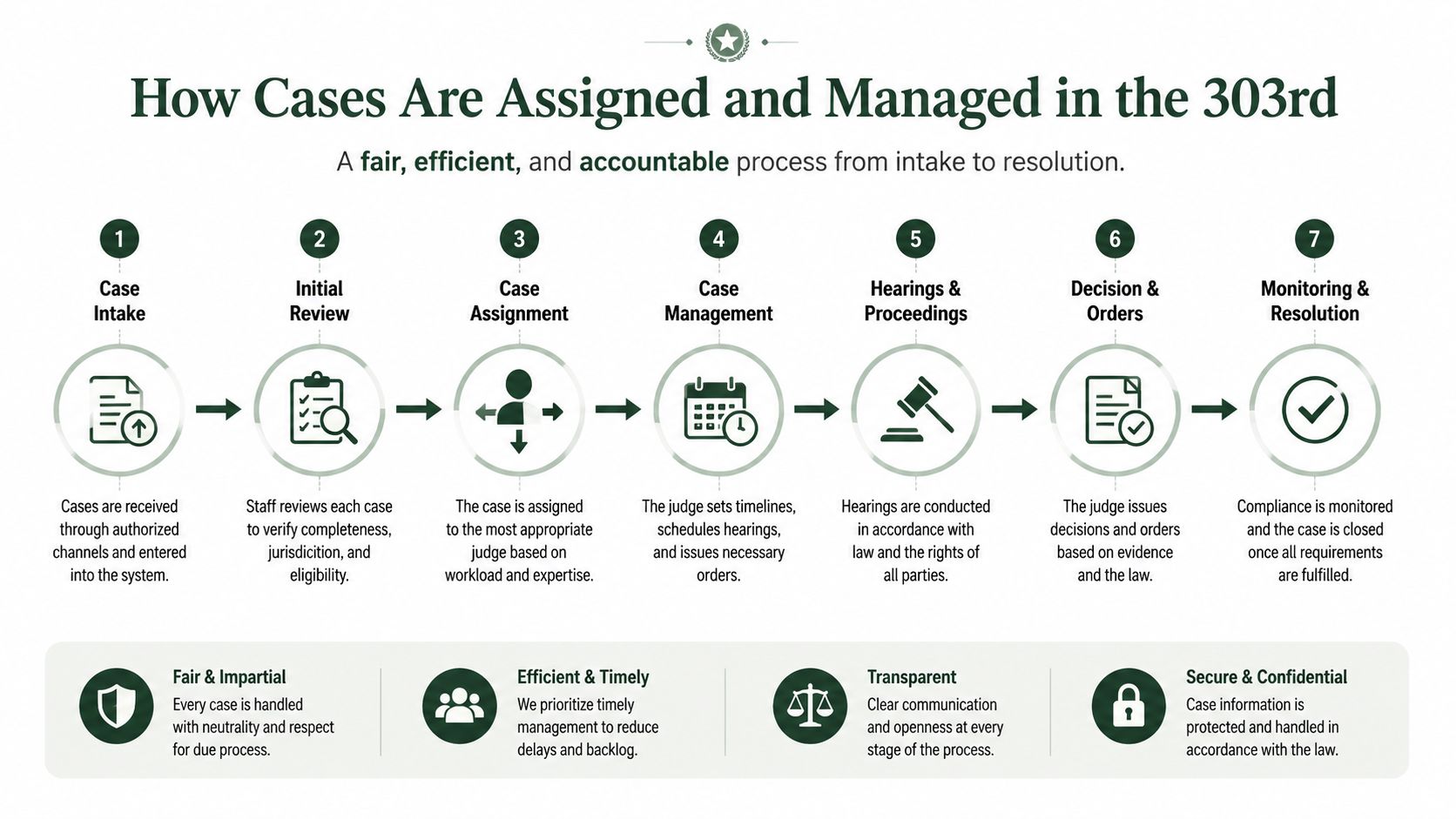
The most significant management issue is the court's dismissal docket. The 303rd policy states that every cause of action is maintained on a dismissal docket and set for dismissal six months from filing unless a party requests retention before the dismissal date. This isn't limited to one type of family dispute. It can affect a divorce, custody case, enforcement matter, modification, or another cause of action filed in the court.
The six-month milestone doesn't mean your case automatically ends on the filing anniversary. It means you must monitor the case and take the action required by the court's policy if the case needs to remain active. A party who waits until after the dismissal date may lose the opportunity to address the issue on the court's preferred schedule.
Use a written case-management system:
- Confirm the filing date. Keep a copy of the filed petition, counterpetition, modification, or enforcement pleading.
- Confirm the assigned court. Make sure the case is in the 303rd and identify the court-specific clerk and coordinator information.
- Calendar the dismissal milestone. Don't rely on memory or assume your attorney, opposing party, or the clerk will remind you.
- Track activity. Maintain copies of settings, notices, orders, discovery, and correspondence with the court.
- Request retention before dismissal. If the case won't be resolved by the dismissal date, follow the court's current procedure for keeping it active.
The coordinator may reset the matter for dismissal review or another dismissal date when a timely retention request is made. That reset isn't a substitute for monitoring the docket. A family case remains a live legal matter only when the parties comply with the court's procedures and actively protect their claims.
Understanding the Bifurcated Docket Structure
The 303rd divides family-law matters between the district judge and the associate judge. This is the central feature of the court's docket procedures. The decision-maker assigned to a hearing can affect the available setting, the type of presentation required, and the next step if a party challenges the ruling.
The district judge handles matters that generally involve final adjudication, significant dispositive issues, or review of an associate judge's ruling. The associate judge handles many temporary, discovery, and interim matters that need a more focused and efficient setting.
Who hears which matter
| Matter Type | Heard By |
|---|---|
| Contempt and enforcement | District judge |
| Contested divorce | District judge |
| Final custody modification | District judge |
| Paternity | District judge |
| Prove-ups by attorney | District judge |
| Motions for new trial | District judge |
| Motions for summary judgment | District judge |
| Appeals from associate-judge rulings | District judge |
| Pre-trials | District judge |
| Jury trials | District judge |
| Temporary orders | Associate judge |
| Temporary restraining orders | Associate judge |
| Protective orders | Associate judge |
| Writs | Associate judge |
| Discovery disputes | Associate judge |
| Reinstatements | Associate judge |
| Withdrawal and special-appearance motions | Associate judge |
| Child-support modifications | Associate judge |
| Visitation modifications | Associate judge |
| Motions to compel or for sanctions | Associate judge |
The assignment isn't merely administrative. A temporary custody request is different from a final custody modification. A motion to compel discovery is different from a summary-judgment motion. A protective-order request is different from a contested divorce trial. Each requires a different record, notice, evidence plan, and requested order.
For example, a Dallas parent seeking temporary possession may need focused evidence about the immediate parenting arrangement, safety concerns, school logistics, or support needs. A parent seeking a final custody modification must prepare for a broader adjudication of the requested permanent changes. The temporary ruling won't necessarily decide the final case, but it can influence schedules, negotiations, and the practical status quo.
Strategy follows the decision-maker
Before filing, ask three questions:
- What relief am I requesting? Temporary, emergency, discovery-related, enforcement, dispositive, or final?
- Which judicial officer hears it? Use the court's published categories rather than assuming the district judge handles everything.
- What happens after the ruling? Some associate-judge rulings may be subject to review or appeal before the district judge under the applicable procedure.
A party who files a temporary-orders request as though it were a final trial request may create unnecessary delay. A party who treats a discovery dispute as a final merits issue may arrive with the wrong presentation. The court's published family-docket procedures in another Dallas County family court can also help explain why local family-court calendars often separate hearing categories, but you should verify the 303rd's current requirements directly before acting.
Weekly Calendar Segments and Hearing Schedules
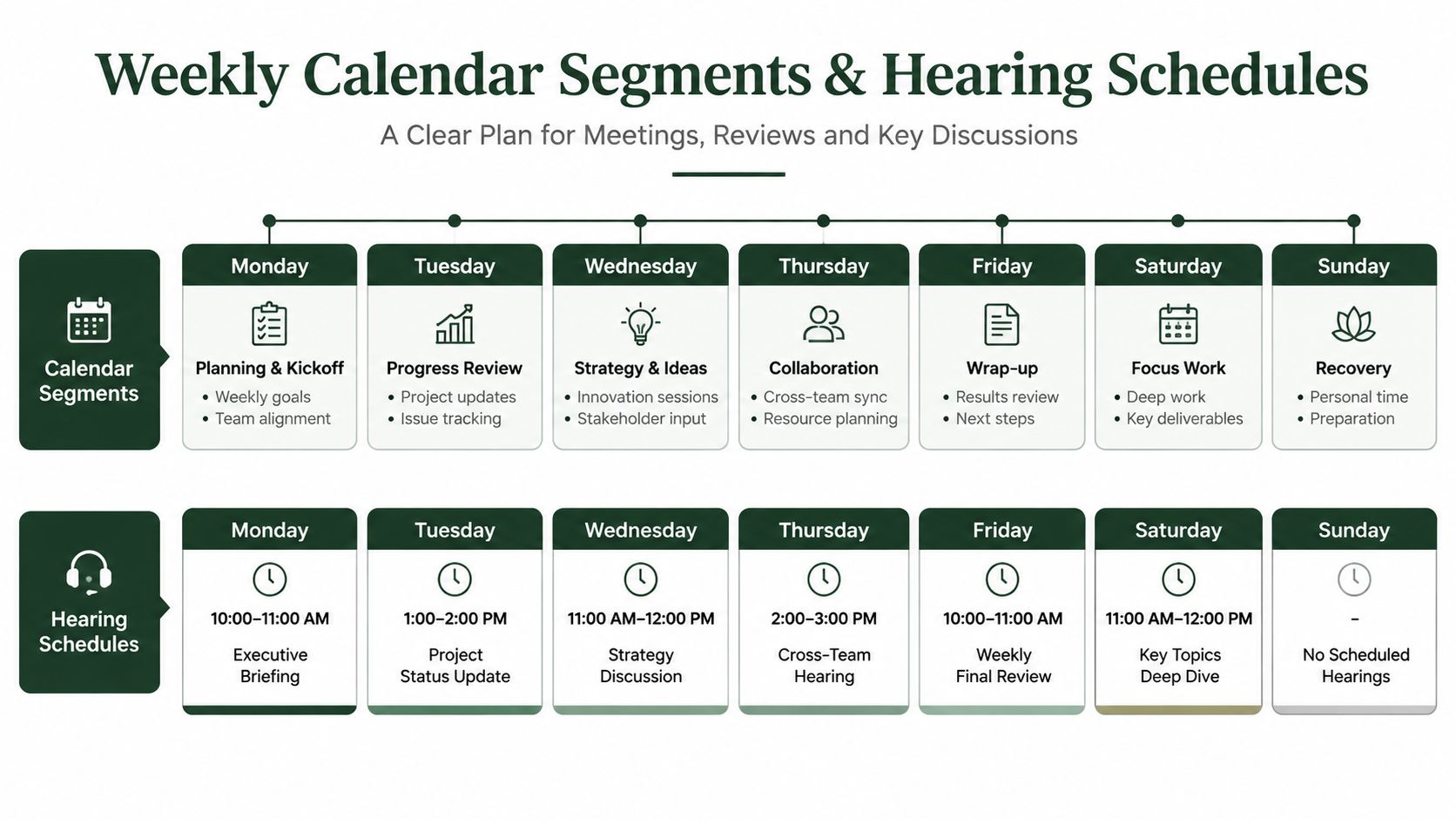
A hearing date can look available and still be wrong for your case. The 303rd separates its calendar by hearing type, so identify the setting before requesting a date. The posted procedures list contempts and enforcements on Monday at 9:30 a.m., pre-trials by Zoom on Monday at 1:30 p.m., and trials generally Tuesday through Thursday or as scheduled by the court. Prove-ups are heard each Wednesday morning and must be scheduled with the clerks. Confirm the current procedures before relying on any calendar description.
What each setting means
Monday morning enforcement settings address alleged violations of an existing order. The dispute may involve child support, possession and access, or another enforceable family-law obligation. Bring the order at issue, a concise list of each alleged violation, and organized proof showing what happened.
Monday afternoon pre-trials by Zoom deal with readiness and trial organization. The court may address disputed issues, witnesses, exhibits, discovery status, scheduling, and the work remaining before trial. Remote attendance does not reduce the preparation required. Test your connection, have the correct case information available, and be ready to state your position clearly.
Wednesday morning prove-ups are attorney prove-up settings and must be scheduled with the clerks. A prove-up asks the court to approve and finalize an agreed or otherwise procedurally ready matter. Check the final paperwork line by line. It must address applicable issues involving children, support, possession, property, debts, and requested orders.
Tuesday through Thursday trials generally handle final adjudication, unless the court assigns another date. Trial preparation requires more than a summary of the dispute. In a high-asset divorce, organize business records, valuation materials, real-estate documents, retirement-account information, tracing evidence, reimbursement claims, and testimony about disputed assets.
The district judge and associate judge may handle different portions of the docket. Match the requested relief to the assigned decision-maker and calendar segment before you prepare witnesses or exhibits.
Calendar discipline matters: Request a setting that fits both the relief sought and the court's available schedule. Do not treat an open date as automatic permission to use it.
The 301st District Court family docket procedures offer a useful Dallas County comparison, but the 303rd's current procedures control cases assigned there.
Temporary Orders and Emergency Relief Procedures
Temporary orders, temporary restraining orders, protective orders, writs, and similar interim matters are routed to the associate judge under the 303rd's published docket structure. The practical reason is speed. Parents and spouses may need a temporary custody arrangement, temporary support, restrictions on conduct, or protective relief before the court can conduct a final trial.

A temporary-orders hearing isn't the same as a final adjudication. The court addresses immediate arrangements and disputes while the case continues. The evidence should be focused on the relief requested. A parent asking for temporary possession should organize proof related to the child's current needs, the existing arrangement, the alleged problem, and the specific temporary schedule or restriction requested.
A Dallas parent might file a custody case after the child begins living primarily with the other parent and communication breaks down. The parent may need temporary orders addressing possession, exchanges, school communication, and support while the final custody dispute remains unresolved. That parent should present a workable proposal, not merely describe why the other parent is difficult. Courts need a concrete temporary arrangement they can order and the facts supporting it.
Temporary relief compared with final relief
| Temporary or emergency matter | Final adjudication matter |
|---|---|
| Addresses immediate arrangements | Resolves the disputed legal issues |
| Goes before the associate judge under the 303rd structure | Often goes before the district judge |
| Focuses on the specific interim relief requested | Requires a broader trial record |
| May establish the practical status quo | Produces final orders subject to applicable review rights |
| Requires prompt, organized evidence | Requires comprehensive preparation and presentation |
Emergency relief also demands procedural care. A request involving safety, a protective order, or an urgent child-related concern should state the facts clearly and identify the order needed. Avoid exaggeration. Unsupported accusations can distract from the legally relevant facts and damage credibility.
If a party disagrees with an associate judge's ruling, the case may proceed through the applicable review or appeal process before the district judge. That process has its own requirements, so a dissatisfied party shouldn't assume that disagreeing with the ruling automatically creates a new hearing. The 302nd District Court family docket guide offers a related local comparison, but the 303rd's current policies and the governing Texas procedure control.
Continuances Dismissals and Docket Pitfalls to Avoid
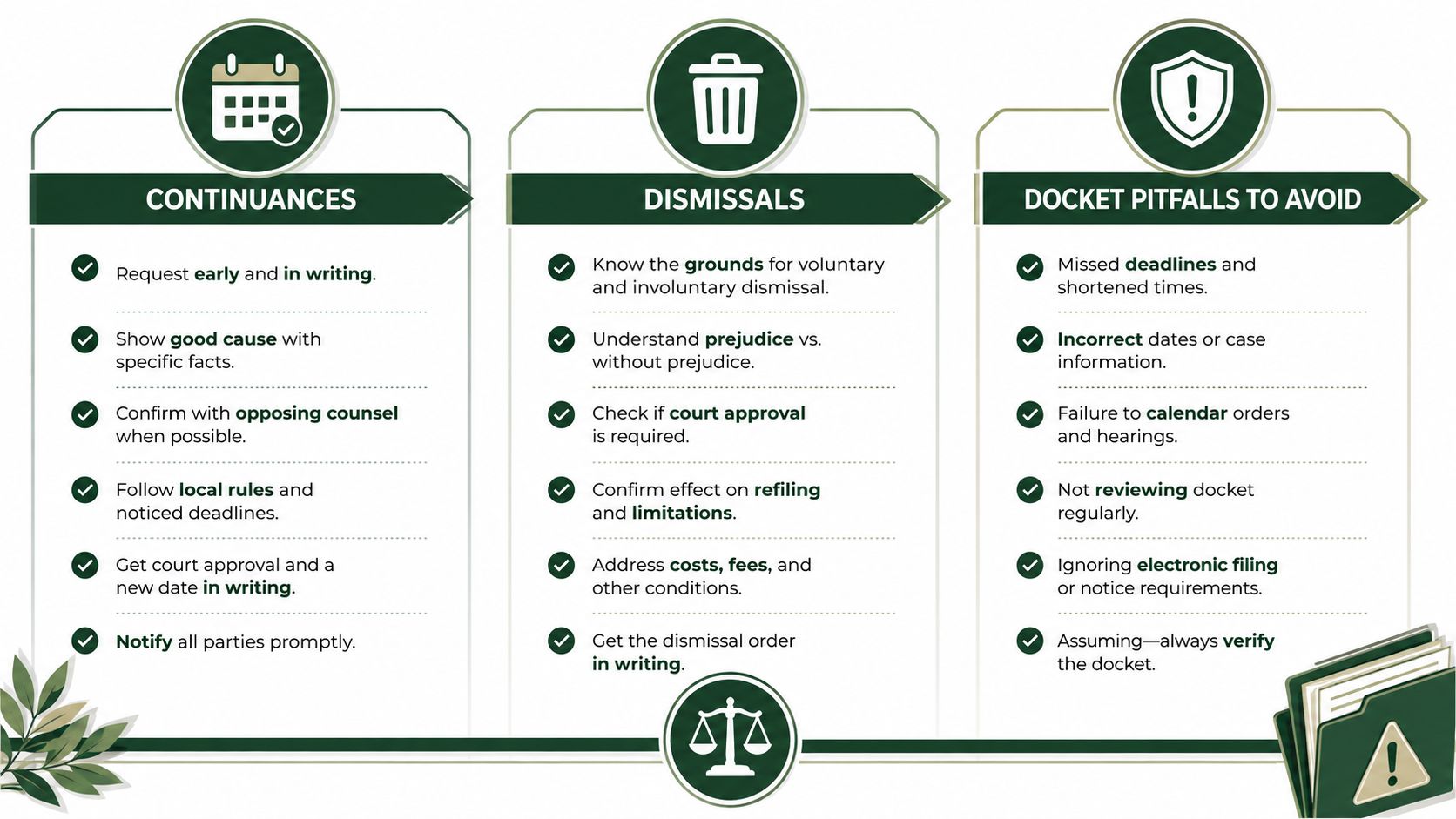
The most dangerous mistake in the 303rd is treating a court setting as flexible until someone confirms otherwise. The court's published policies state that once a case has a trial setting, a continuance or pass requires the judge's approval. A party shouldn't assume that an agreement with opposing counsel, a scheduling conflict, or an informal request automatically removes the case from the trial docket.
The same policy states that a case won't be withdrawn from the docket unless both sides specifically agree and communicate that agreement to the court before the hearing, or the court grants a continuance. Private agreement isn't enough. The court must receive the required communication or approve the continuance.
Treat dismissal review as a real hearing
The dismissal policy creates another major risk. Every cause of action is placed on a dismissal docket and set for dismissal six months after filing unless a party requests retention before that date. If the party makes a timely request, the coordinator may reset the matter for dismissal review or a new dismissal date. That doesn't guarantee that the case will remain active without further action.
If the case is set for dismissal review, the requesting party must appear before the district judge. Missing that appearance can leave the court without the information needed to keep the matter moving. A party who believes a pending motion, counterclaim, discovery dispute, or settlement discussion automatically protects the case is taking an unnecessary risk.
Use this checklist before every significant date:
- Read the setting carefully: Confirm whether it is a dismissal review, trial, pre-trial, enforcement matter, or another hearing.
- Obtain approval: Secure the judge's approval for a continuance or pass when the case has a trial setting.
- Communicate agreements: Make sure any agreement to withdraw a case from the docket reaches the court before the hearing.
- Request retention on time: Don't wait until after the dismissal date to address an inactive case.
- Prepare for review: If the court sets dismissal review, be ready to explain the case's status and the action needed to move it forward.
A filed petition isn't a case-management plan. You must monitor settings, respond to court notices, and take the action required to preserve the case.
These rules matter in every family dispute, including an uncontested divorce that still needs a prove-up, a custody modification awaiting an agreement, or an enforcement case where the parties are negotiating. Settlement discussions may be useful, but they don't replace compliance with the court's docket procedures.
Practical Next Steps and Courthouse Resources
Start by confirming the court, the case number, the assigned hearing type, and the next setting. The George L. Allen, Sr. Courts Building is at 600 Commerce Street, Suite 103, Dallas, Texas 75202, where Dallas County identifies the district-clerk location for family-court forms and civil or family-court guidance. The county's family-court resource information lists the district clerk's telephone number as (214) 653-7307, while the 303rd court clerk's direct line is (214) 653-7611. Dallas County's court resources identify the courthouse and district-clerk information.
The two offices serve different practical functions. The district clerk is generally the place to begin for filing forms and obtaining filing-related guidance. The court-specific clerk's office is the more logical contact for information tied to the 303rd's docket, hearing settings, prove-ups, and court procedures. Ask precise questions and keep written confirmation when possible.
A preparation checklist
- Confirm assignment: Verify that your case is assigned to the 303rd District Court.
- Identify the setting: Determine whether you need the associate judge or district judge.
- Review the calendar: Match your request to the court's current hearing category and schedule.
- Check dismissal status: Determine whether the case is approaching the dismissal docket.
- Organize evidence: Separate pleadings, orders, financial records, communications, photographs, school records, and other exhibits by issue.
- Prepare the requested order: Write down the exact relief you want the court to grant.
- Verify current procedures: Contact the appropriate clerk before filing or appearing because local policies, technology requirements, and settings can change.
If your case involves a business, professional practice, real estate, retirement assets, stock compensation, disputed separate property, tracing, reimbursement claims, or suspected hidden assets, docket preparation is only part of the problem. You also need a financial discovery and trial strategy that protects the marital estate and preserves the evidence supporting your position.
For case-specific questions, consult a qualified Dallas family-law attorney rather than relying only on general docket information. The correct hearing setting can affect a temporary custody arrangement, an enforcement request, a prove-up, a contested divorce, or the path toward review of an associate-judge ruling.
The Law Office of Bryan Fagan, PLLC offers family-law representation for Dallas County matters including divorce, custody modifications, enforcement, temporary orders, motions, and prove-ups scheduled through the 303rd District Court. Visit The Law Office of Bryan Fagan, PLLC to review Dallas family-law resources and request help evaluating your court setting and next procedural step.
